HISTORY of WYOMING AIRWAY BEACONS
By Mel Duncan
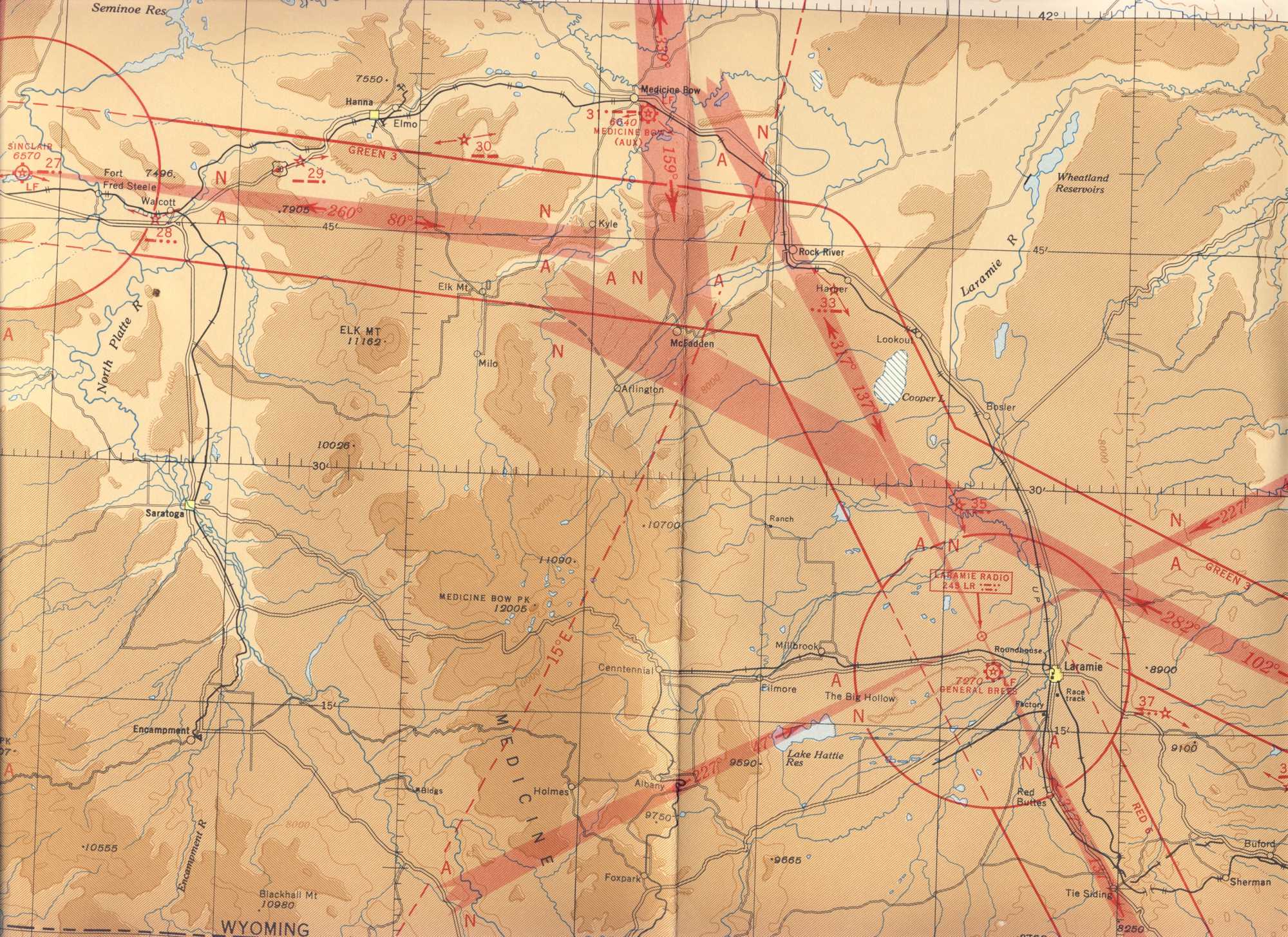
Wyoming’s portion of the Salt Lake to Omaha Airway had 40 beacons spaced about 10 miles apart. The Wyoming portion of the airway closely followed the railroad tracks except between Salt Lake City and Knight and between Laramie and Cheyenne.
The beacons were numbered from west (Salt Lake) to east (Omaha). Some had names while some were only numbered.
1. Salt Lake City, Utah
2. (Wanship, Utah)
3. (Utah)
4. (Utah)
5. (Wyoming)
6. Knight, Wyoming
8. LeRoy
12. Granger
16. Rock Springs
19. Bitter Creek
22. Red Desert
24. Cherokee
27. Parco 29. Dana
31. Medicine Bow
33. Rock River
37. Laramie
38. Summit (Beacon Hill)
39. Section 33, T15N, R70W. (North of old McIntyre Ranch)
40. Silver Crown
41. Cheyenne
44. Burns
45. Pine Bluffs, Wyoming
46. (Nebraska)
50. Sidney, Nebraska
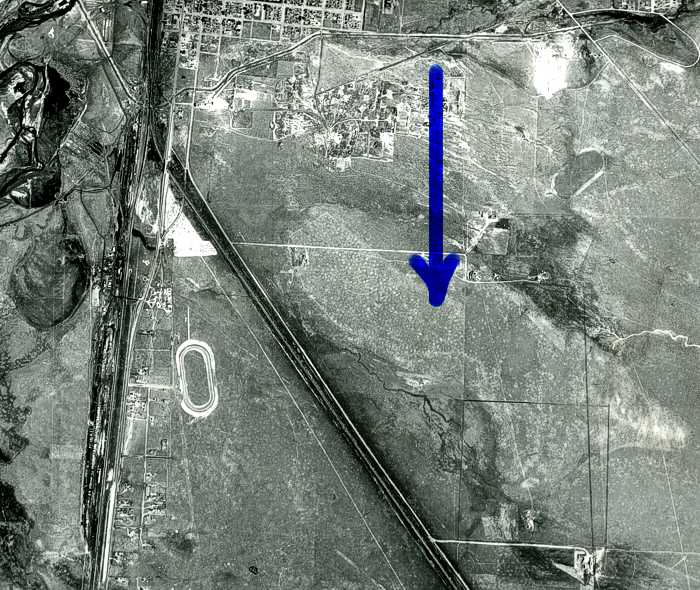
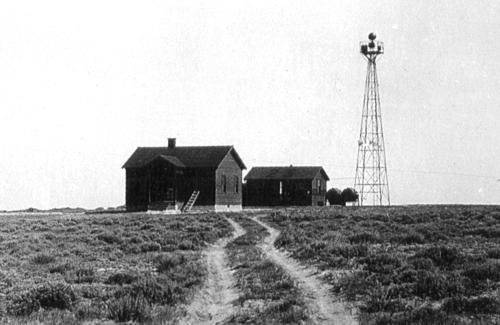
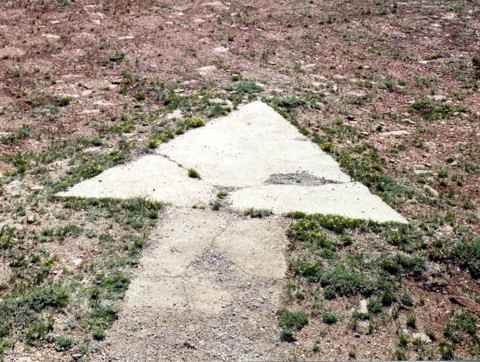
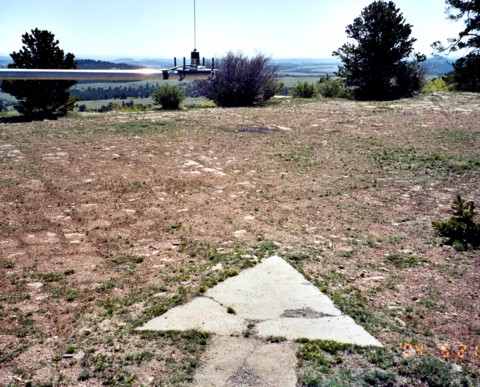
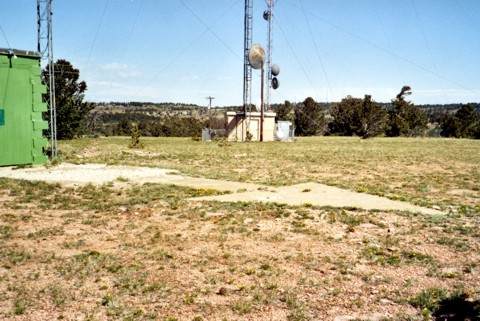
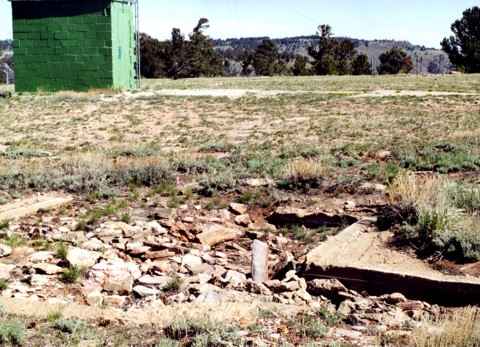
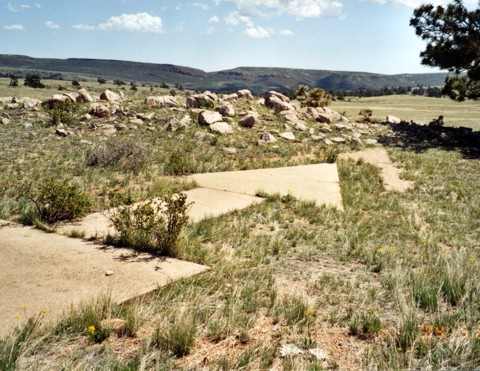
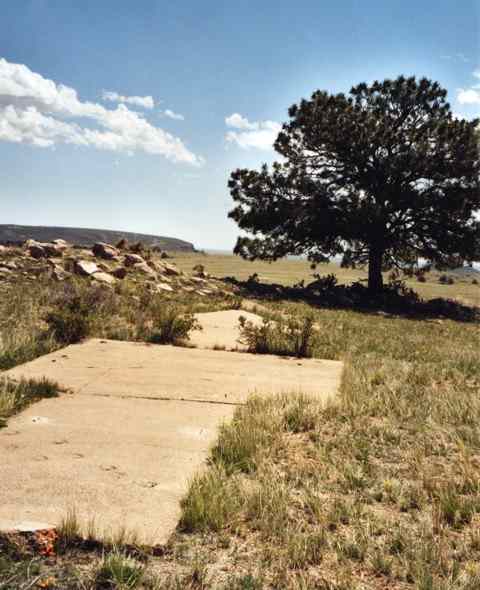
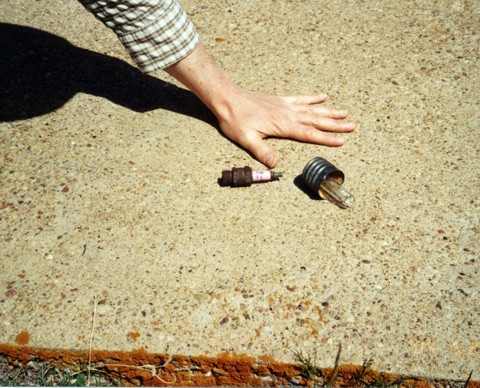
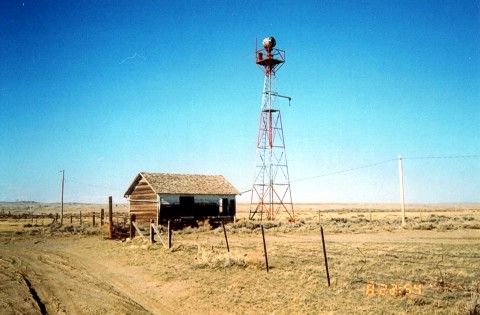
The Summit or Beacon Hill light, number 38, was located one and one-half miles north of the Lincoln Monument at T15N, R72W, Section 14, at 8777 feet. A permit was granted on July 26, 1930 to U.S. Department of Commerce, Lighthouse Service, Airways Division, to use a plot of land, 200 feet square, for beacon site and suitable buildings for caretaker of the light. The 1933 Corps of Engineer’s map indicates a power or telephone line going to the beacon. (photo 1 photo 2, photo 3, photo 4) (41° 16′ 5″ N, 105° 26′ 2″ W) In May of 2004 the site was visited and coordinates confirmed with GPS. Several newer towers now occupy the area but the concrete arrow remains. There also remains some remnants of the old generator system and building foundation.
Beacon number 39 was in Section 33, T15N, R70W about ¾ mile north of McIntyre’s. The elevation is shown as 7528 feet. (photo 1, photo 2, photo 3)
From Happy Jack Road 210 take County road 1 ½ miles to a more or less double turnoff to the east. Take the left branch about 1 ½ mile to the center of Section 33. (Land ownership??)
(41° 13″ 34″ N, 105° 14′ 36″ W) In May of 2004 the site was visited and coordinates checked by GPS. The concrete arrow remains but no buildings.
The Silver Crown Beacon number 40 was located almost dead center of Section 7, T14N, R68W at 41° 11′ 49″ N, 105° 02′ 53″ W. The elevation is about 6729 feet. (Of note: On the Round Top Lake Quadrangle 7.5 minute of 1961, “Airline Camp” is shown located in Section 3, T14N, R68W. This is close to the site of the 1935 airline crash.)
On the Archer Quadrangle of 1963, a beacon is shown located in Section 21 of T14N, R 65W, about one half-mile northwest of U.S. 30 overpass. This was probably beacon number 42. There is no remaining portion of the beacon tower or base.
(41° 09′ 53″ N, 104° 40′ 28″ W)
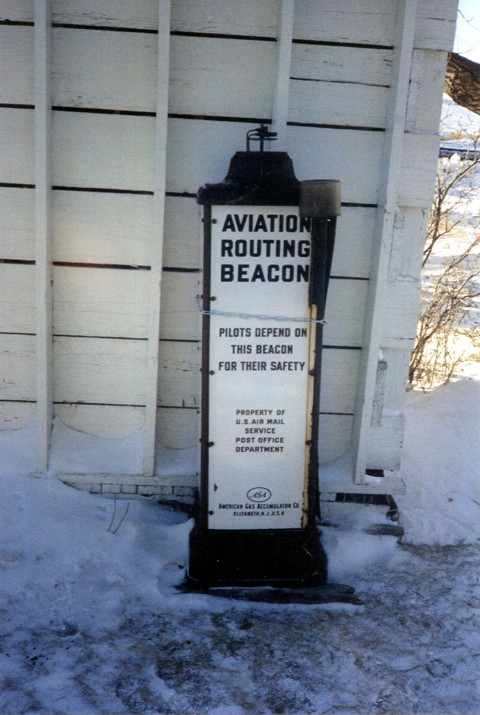
In 1932 the standard airway beacon was a 24-inch rotating unit of approximately 1 million candlepower. In 1933 a new standard was adapted to utilize a 36-inch rotating unit which showed two beacons of light 180 degrees apart. Each beam was about 1,250,000 candlepower. The beacons were designed to show six flashes per minute. The older 24-inch unit rotated six times per minute and the newer 36-inch unit rotated 3 times per minute. The 24-inch beacons were spaced at 10 mile intervals. The newer 36-inch units allowed spacing up to 15 miles between units. Except for the number 8, LeRoy Beacon, the Wyoming beacons were all 24 inch units and retained their original spacing of about 10 miles. The LeRoy Beacon had a 36-inch light. Two blinking colored course lights were mounted with each beacon, green indicating the presence of a landing facility and red indicating the absence of a landing field. In addition, each beacon course light blinked a code indicating which beacon was being observed. Every ten beacons the code was repeated.
The Silver Crown Beacon for example flashed two dashes for identification. The same signal was used by Sidney, approximately 100 miles away.
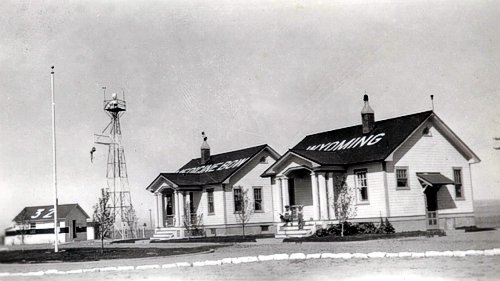
Electricity for remote sites required a gasoline-powered generator. In isolated regions permanent quarters were provided for the caretaker of the power plant generator.
Some of these beacon sites were also utilized for the newer radio beacons that were being installed in the early 1930s. The light beacons were retained at these sites. In 1933, radio range beacons were installed at Knight, Rock Springs and Cheyenne. By 1936, additional radio range beacons were installed at Laramie and Medicine Bow.
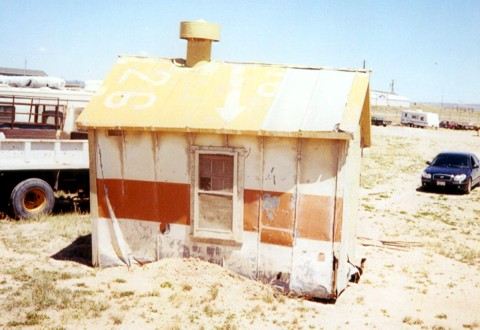
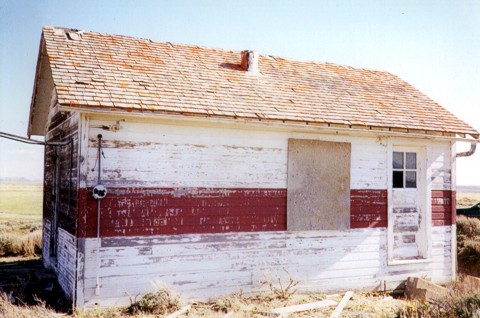
The building roof at each beacon site along the airway was marked with its number and SL-O indicating that you were on the Salt Lake to Omaha Airway. For example, Cherokee Beacon had on its roof “24 SL-O”.
The beacons at the airports were normally located on the highest point of land or atop a building near the site rather than being centered at the landing field.
It behooved a pilot to know his International Morse Code quite well. Cheyenne’s auxiliary code beacon flashed the letter “C” (dash dot dash dot), its radio range station broadcast “CX” (dash dot dash dot, dash dot dot dash) and the course light blinked a modified code for the numeral 1, (dot dot dash).
Intermediate landing fields were provided about every 50 miles affording a theoretical maximum distance of 25 miles to a field in the event of a problem. These intermediate fields were indeed just fields. None of them were paved or oiled and most had a landing space of about 2500 feet.
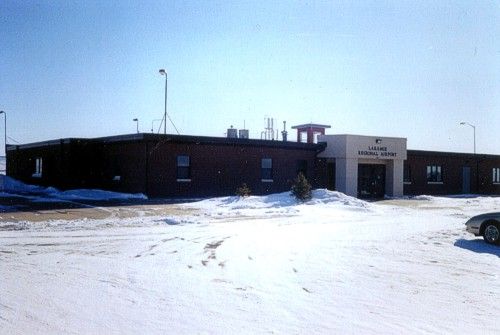
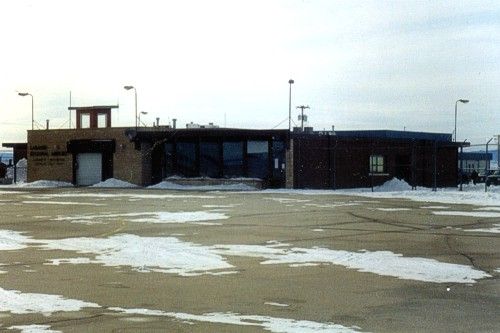
In 1936, only Cheyenne and Laramie were listed as “Airports” and only Cheyenne had paved or oiled runways. Laramie Airport has a restored beacon and tower. The beacon appears to be a 36 inch double unit.
The above historical article was written and submitted by Mel Duncan of Wyoming, May 2004.
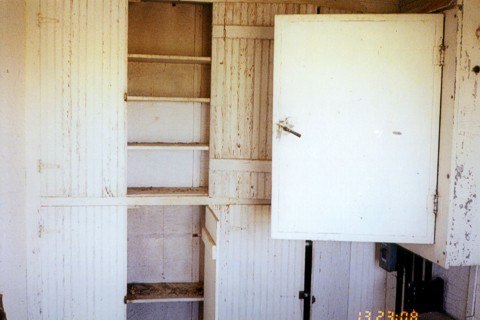 Interior photo. Open cabinet door leads to the junction box located on the north wall. Cabinets would hold fuses, signal flares, and other items.
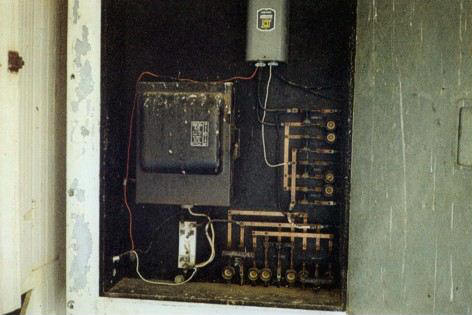 Interior photo. North wall cabinet contains a Westinghouse switch box and circuits.
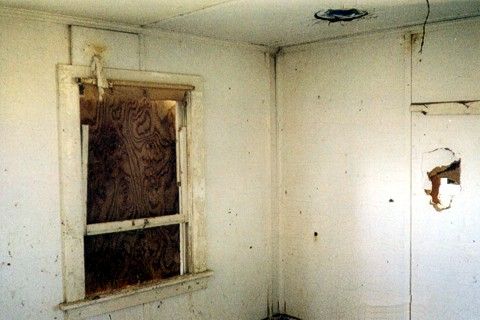 Interior photo
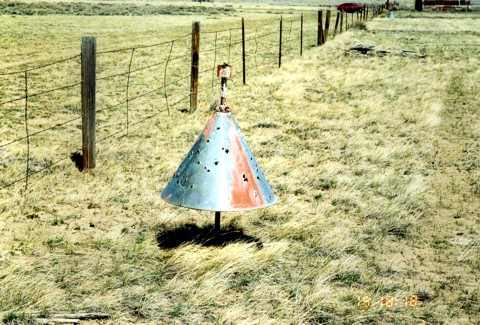 This bullet-riddled boundary cone is located on the west end of the beacon site, inside the fenced boundary
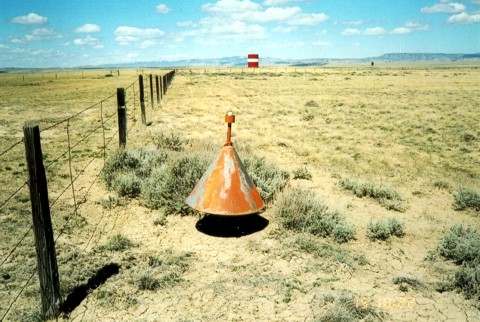 This boundary cone is located on the north end of the beacon site. The red and white tank in the background is the water supply for the city of Medicine Bow.
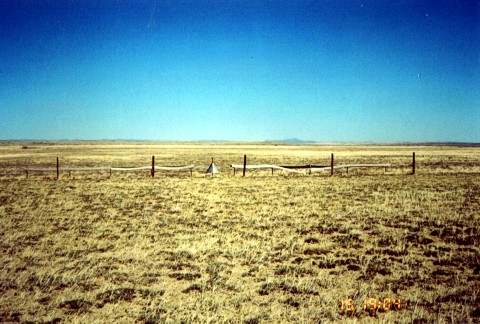 Boundary cone looking south east. The cone and stanchions are in place with wood markers albeit warped and faded.
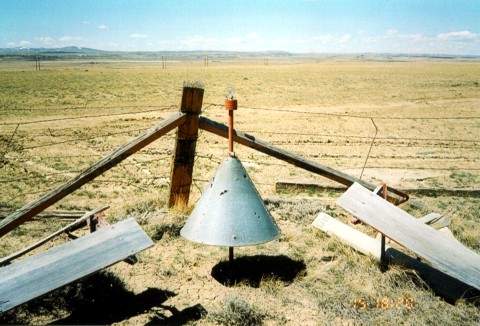 This boundary cone is located in the south east corner of the site and still houses its original 34 watt light bulb
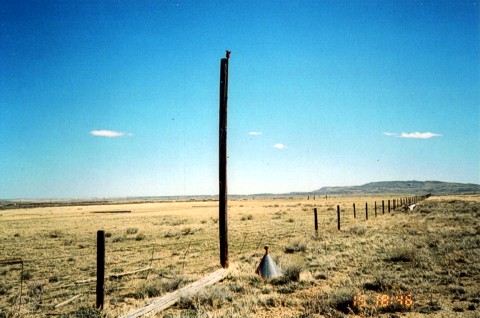 Obstruction pole on the approach end of the runway. Photo is looking north east.
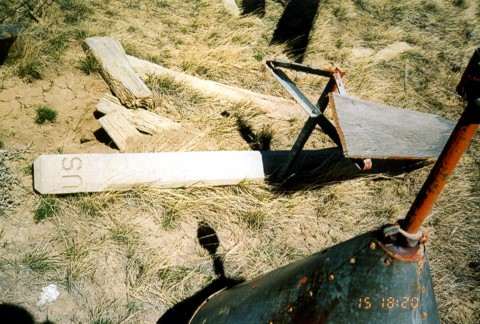 This boundary cone is located in the south east corner of the site. A U.S. concrete property marker can be seen laying on the ground along with the triangular stanchion for supporting 1×16 red and white wood runway markers.