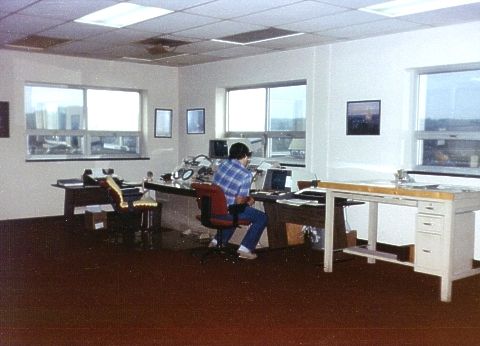
Elkins FSS (EKN), West Virginia, date unknown
Gene Betler in the operations area. The weather briefing equipment was the GS200 and remoted from Charleston FSS
Elkins FSS (EKN), West Virginia, date unknown
Gene Betler in the operations area. The weather briefing equipment was the GS200 and remoted from Charleston FSS
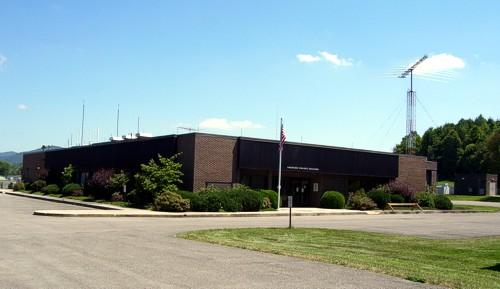
Elkins FSS (EKN), West Virginia, July 15, 2007
Photos submitted by John Lynch
The facility was decommissioned July 16, 2007.
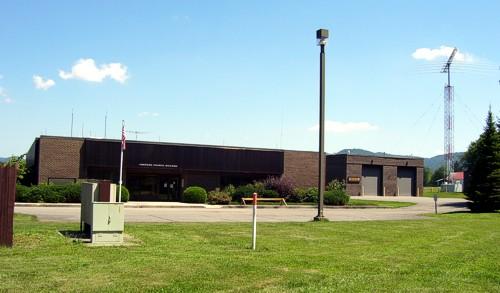
Elkins AFSSS building
______________
______________
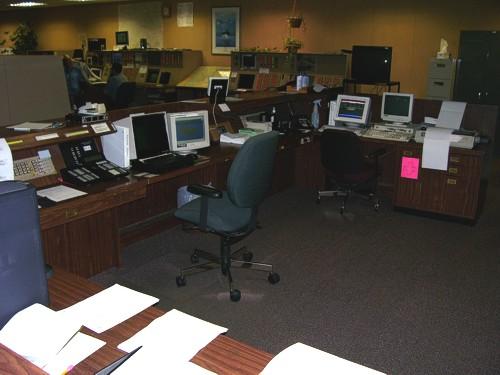
Supervisors desk located in the operations area
______________
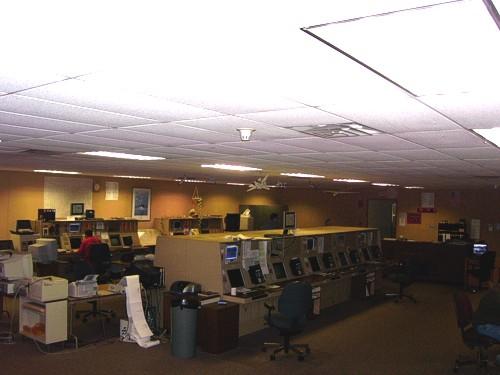 Operations area
______________
 Operations area. Seated at the table is Vicki Sandy. The Model planes hanging from the ceiling were built by master model painters Richard Kelley and Jim Aldredge while stationed at Charleston FSS (CRW), WV, during the mid 1980s.
______________
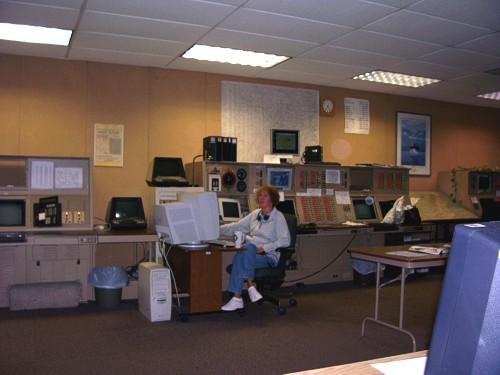
In this photo sits Specialist Penny Pavlicka at the Inflight 1 Position. Equipment listed left to right: NOTAM Position is far left with two HIWAS remotes (from Broadcast) mounted in the panel. Next is the Directional Finder (DF) Position and two VORTAC CRT Monitors (RCMF).
Behind Penny is the ASOS monitor and Inflight Panel with the Localizer monitor in the upper left, the Greenbrier Valley Airport (LWB) VOR monitor below, and ASI center and Wind Instruments. M1FC and WSI monitors are next and the Frequency Panel, sitting on top of the console is the TAPs Monitor (a leased program that provides temporary flight restrictions – TFR). Inflight 2 is next, then the Lost Aircraft Plotting Board, Inflight 3 to the far right, Inflight 4 is next out of the picture.
Historical Note: Missing WSI monitors (leased weather graphics) located at every other position were sent to both Saint Louis AFSS and Miami International AFSS after hurricane and flood damage occurred to the building.
______________
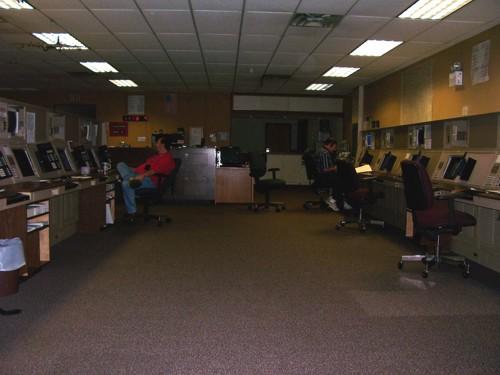
Preflight operations area. Seated left is David Smith and right Scott Robinson
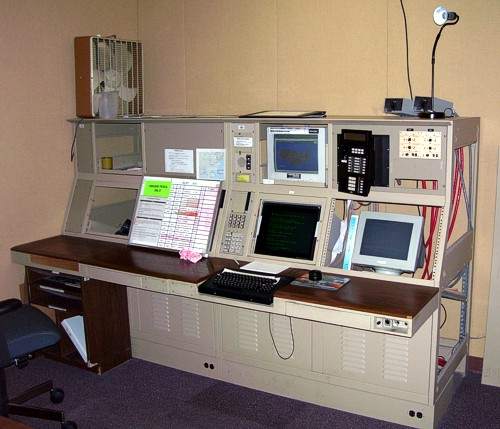 Broadcast position combined with the Weather Observation position. The dry erase board to the left of M1FC (black CRT) is the TIBs and HIWAS Status Information Area. The CRT to the lower right is the ASOS input machine for weather observations. The keyboard is missing since decommissioning of the position and after Lockheed Martin was awarded the the contract.
The two tan remote BKW and EKN HIWAS recorders are directly above the ASOS and the light tan remote HIWAS switches are above them on the top of the console. Laying on top of the center console is the National Weather Service (NWS) weather observation recording form for maintaining weather observation currency. To the left laying flat are two temperature/dew point calculator wheels, just to the right of the fan.
______________
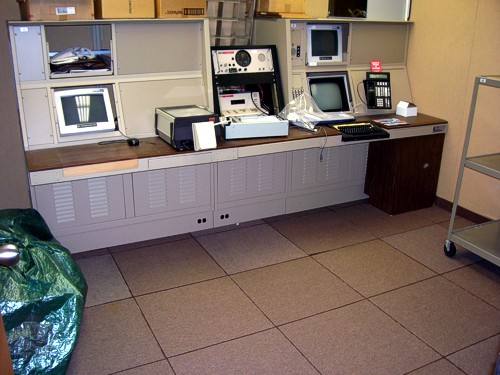 Directional finder (DF) training position where the DF simulator can be seen in the middle of the console
______________
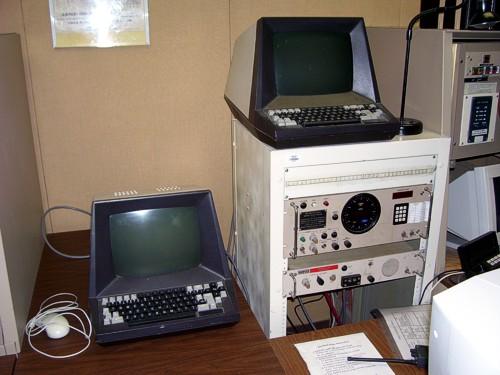 Directional finder (DF) equipment used to locate lost aircraft. This particular DF equipment first began service at Parkersburgh FSS (PKB), West Virginia, and was shipped to Alaska just a few weeks before Elkins FSS closed.
______________
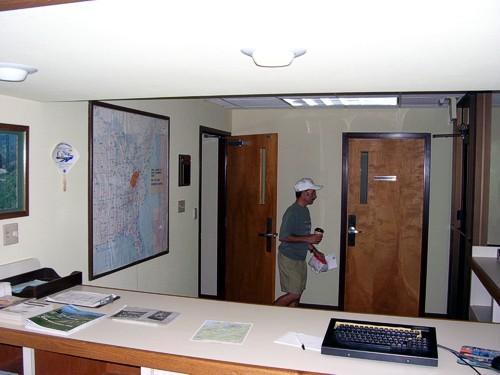
The Preflight Counter. In this photo Greg Pavlicka is seen walking out of the facility for the last time in 2006, changing options, headed to the Oklahoma City FAA Air Traffic Control Tower Option. The Wall Planning Chart can be seen to the left in the photo, a fast reference for pilots to map distances.
______________
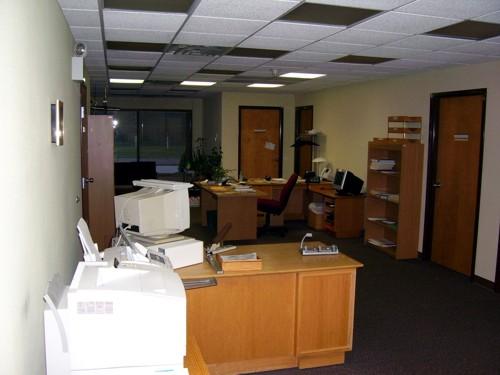 Administrative offices
______________
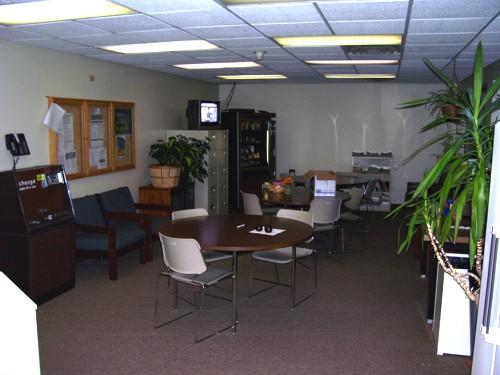 Break room
______________
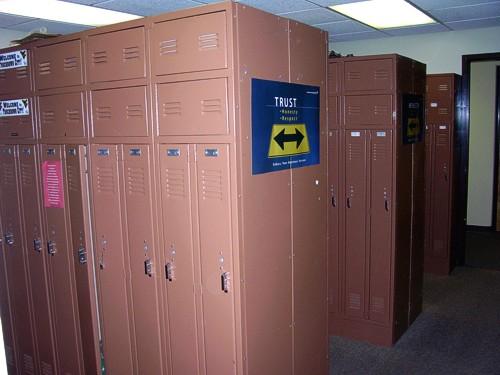 AFSS break room employee lockers
______________
 AFSS hallway
______________
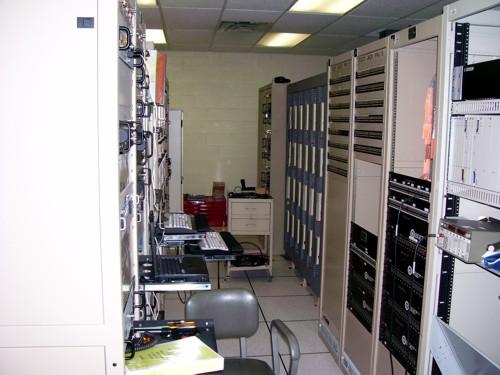 AFSS equipment room
______________
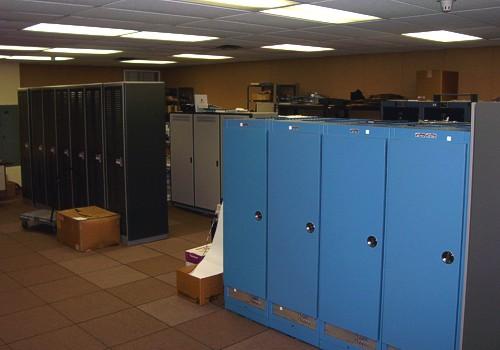 AFSS equipment room
______________
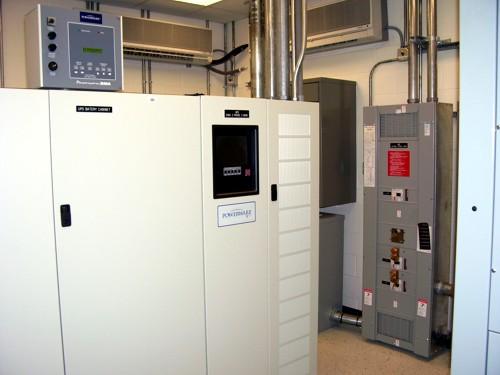 Uninterrupted Power Supply (UPS) located in the equipment room
______________
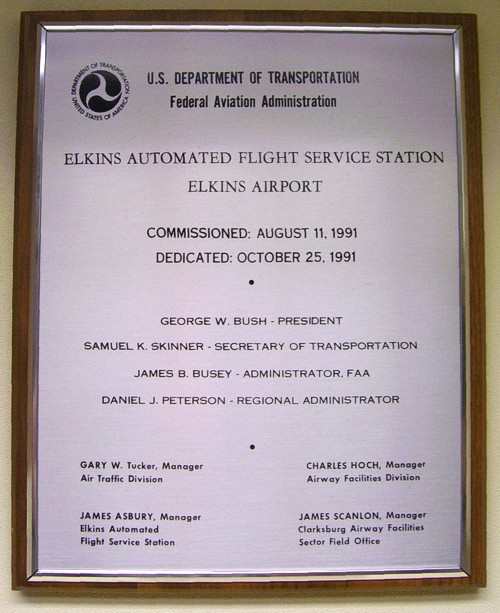 Facility dedication. Elkins FSS, the last remaining flight service station in West Virginia, closed on July 16th 2007, at 4 PM. Manager Bill Painter was the last specialist on duty. The last briefing was provided by John Lynch to a former AFSS specialist and pilot Wayne Sheets at 2:45 PM at the walk-in counter. During its nearly 16 year history, using traffic management, Elkins served pilots from the states of Delaware, Maryland, Virginia and West Virginia on a near regular basis. The flight plan area consisted of Western Maryland (west of Hagerstown (HGR), and West Virginia.
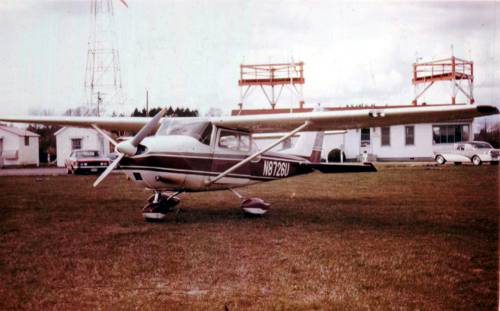
Submitted by Doug Croffut
Toledo FSS (TDO), Washington, 1966
In the background behind the tail of the aircraft is the Toledo Flight Service Station
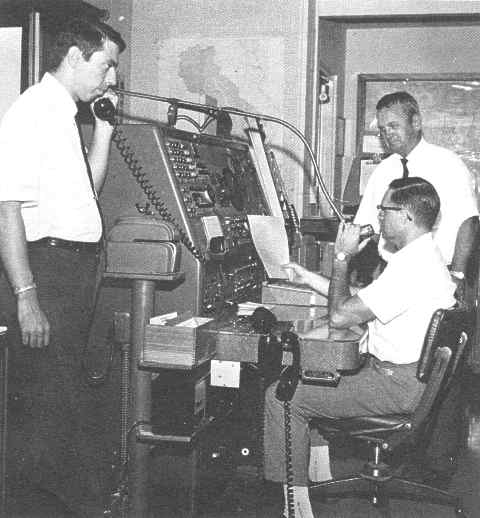
Wenatchee FSS (EAT), Washington, 1970
Manning the air-ground console at the Wenatchee FSS are (from left), Robert Jackson, Albert Lenny, and Chief Harold Wick.
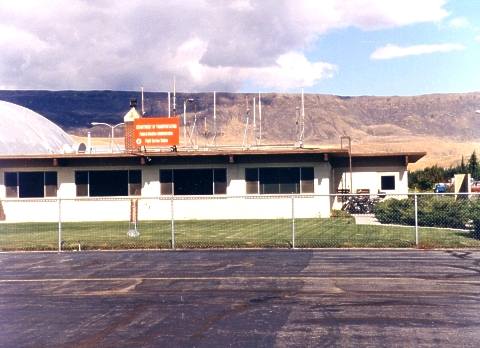
Wenatchee FSS (EAT), Washington. 1984
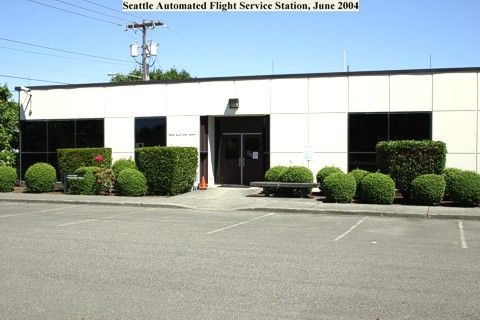
Seattle AFSS (SEA), Washington, June 2004
Front side of the AFSS building.The facility was decommissioned July 30, 2007.
Submitted by Claude Genest
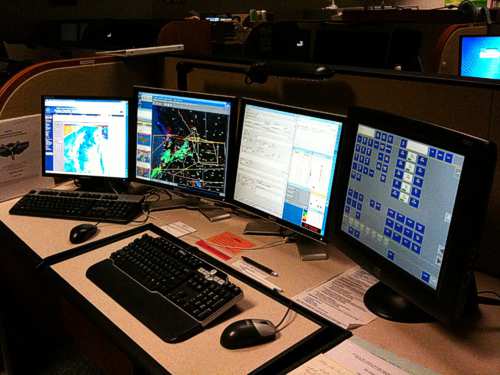
Seattle AFSS (SEA), Washington, 2010
Photo of the FS-21 position suite prior to closure of facility
Submitted by Claude Genest
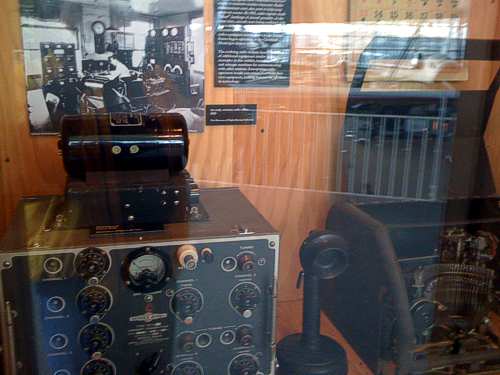
Seattle Museum of Flight, Washington
Photo of the first CAA type of airway communication across the United States
Courtesy of Society of Airway Pioneers
Toledo FSS, Washington, 1952
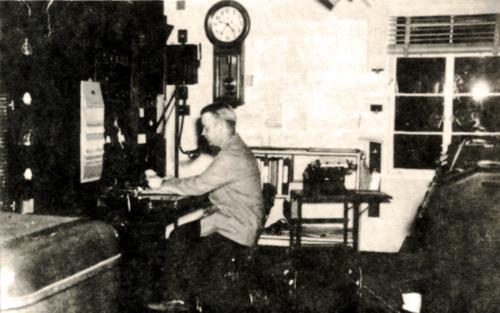
Receiver rack A/G position. Charles E. “Abby” Abshire, 126, on duty. Receiver rack positions were common until the 1950’s when remote consoles were installed. Toledo FSS was modernized circa 1955.
Seattle FSS (SEA), Washington, 1973
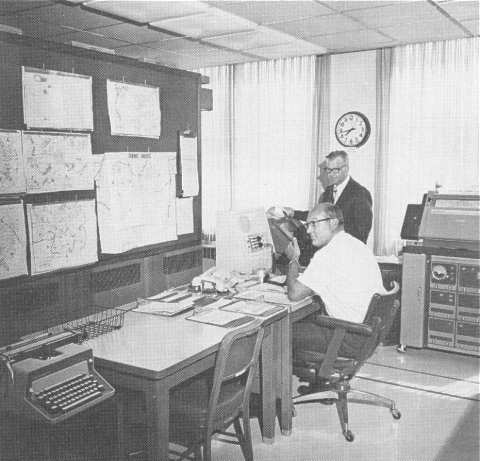
Seated at a radio/air-ground console is Seattle EWAS, specialist Ted Hoffman, while FSS chief C.E. Abshire checks the weather teletype. EWAS communications have a range of 80 nautical miles remoted to the facility from other stations in the area.
______________
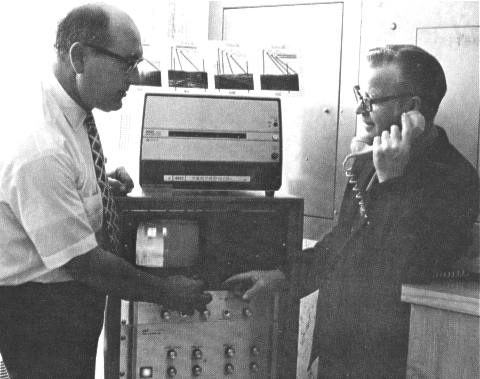
Seattle FSS chief Abshire uses data-phone system, as specialist Hoffman adjusts the TV screen for the closed-circuit camera scanning Stampede Pass 42 miles away.